
Sunstone of Time Tier List: Chapters Ranked by Difficulty
All six Sunstone of Time chapters ranked from hardest to easiest, with the puzzle family that decides each rank and the chapter most players quit on.
Six chapters, one difficulty curve, and a ranking that almost nobody guesses correctly before playing. The lab is not the easiest chapter in practice, and the finale is not the hardest.
This tier list ranks chapters by how much time a first-time player loses in them, not by how clever the puzzles are. Those are different questions, and the second one has a different answer.
The full route lives in the Sunstone of Time walkthrough → if you want order before rankings.
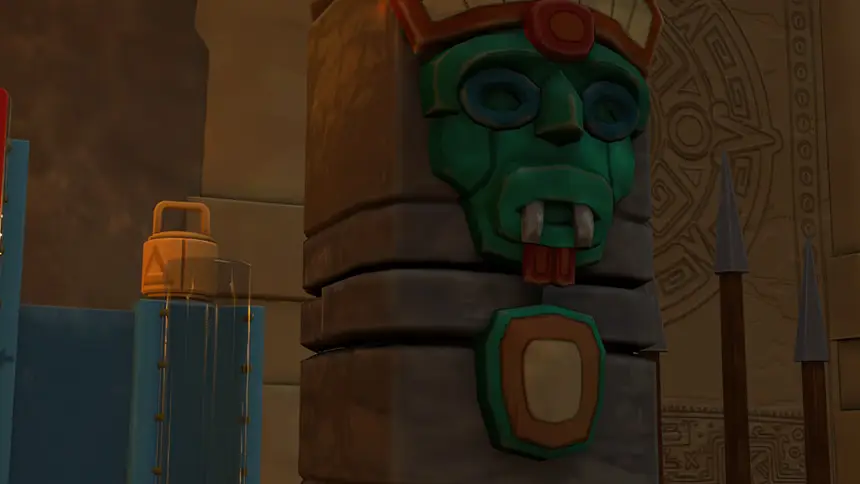
The ranking
| Tier | Chapter | Why it lands here |
|---|---|---|
| S | 5. Observatory | Era state machine, most reach, most backtracking |
| A | 6. Templo Mayor | Dense, but every mechanic is already taught |
| A | 4. Hidden temple | Reading-heavy, codex ordering, tile wall |
| B | 3. Prison cell | Two mechanical languages, one converter |
| B | 2. Ritual chambers | Four stations, clear feedback, slow start |
| C | 1. University lab | Tutorial, one code, one missable pickup |
S tier: the observatory
Ranking by time lost is why the tiers line up with the how long to beat → numbers for each chapter.
Chapter 5 wins the difficulty argument because it is the only chapter where the room has more than one state and the game does not label it. You set an era, plot a constellation, take an item, and use it on a lock that only exists in that era.
Three layers stack: spatial (the star grid), temporal (the era control) and inventory (the key item). Nothing here is unfair, but a single mistake in the era setting makes every following action silent and wrong, and the observatory is big enough that you can spend ten minutes walking before you notice.
It is also the worst chapter for comfort: domed ceiling, a lot of looking up, and close-up work on small studs. If you are going to feel ill in Sunstone of Time, it happens here.
A tier: the finale and the temple
Templo Mayor is dense rather than difficult. It has three tiers and a light puzzle, but every system in it was taught earlier. Players who took notes in the temple and the observatory finish it in ninety minutes; players who rushed spend three hours.
The hidden temple is the reading chapter, and reading is where VR is weakest. Shallow carvings, small glyphs, a codex that has to be laid out on a real surface. The tile wall is the most tactile puzzle in the game and the most forgiving; the codex is the opposite.
Both are A tier for different reasons: one for density, one for legibility.
B tier: the prison and the ritual chambers
The prison introduces the two-language system and a converter, which is a genuinely good puzzle idea and a slow one to learn. Once you understand that stone mechanisms feed metal ones and never the reverse, the chapter collapses to a routing exercise. Most of its difficulty is the first ten minutes.
The ritual chambers are B tier because they are the first real puzzle room and they still hold your hand. Four stations, clear feedback, a decoder wheel that makes the chest solvable. The maze is the only station that punishes impatience, and it cannot be failed permanently.
It is not a puzzle. It is the moment in Chapter 3 when the game stops telling you which layer a mechanism belongs to. Everything after that assumes you can classify on sight. If Chapter 3 feels easy, you learned the habit; if it feels brutal, that habit is the thing to practise.
C tier: the lab
The lab is a tutorial with two trophies in it. The bracelet scanner takes a minute to activate, the terminal code is in the room, and the jade is on the central table.
C tier does not mean bad. It means the chapter cannot stop you. The only way to lose time here is to skip the jade, which costs a slower fallback in the prison and a trophy.
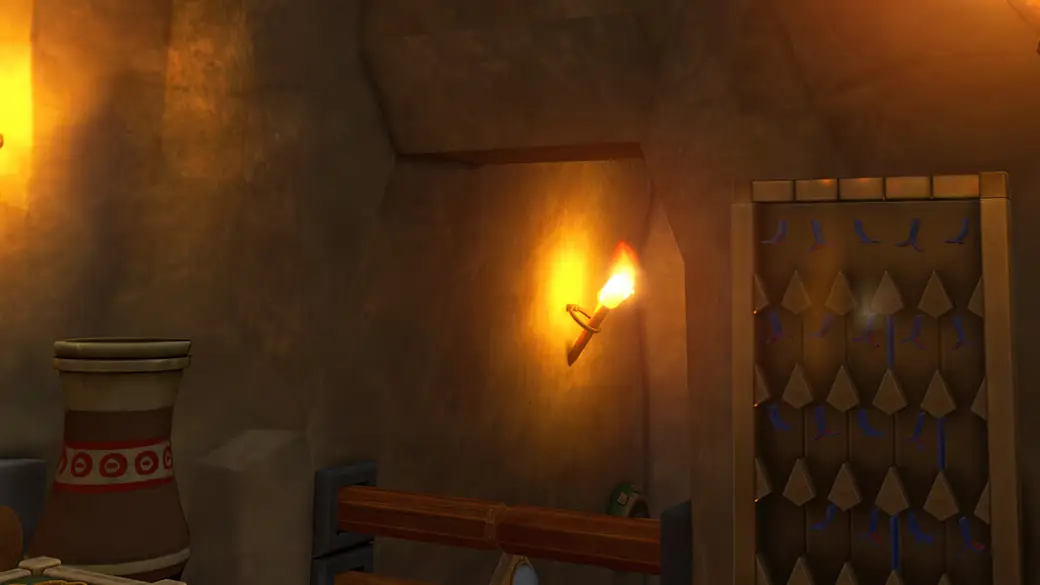
Hardest single puzzle in the game
If the ranking were by individual puzzle rather than chapter, the final light puzzle would top it. Light routing is the one mechanic where the game gives you a target state and no partial credit, and the beams interact with each other in ways that are hard to read from inside the room.
The tetromino wall is the most satisfying. The refrigerator puzzle is the most likely to be missed, because it does not look like part of the main route.
FAQ
Which chapter is hardest?
The observatory, because of the era state machine and the physical demand.
Which chapter is easiest?
The lab. It is a tutorial with a code lock.
Is there a difficulty setting?
No. The game has one difficulty and no assists.
Where do most players stop?
Chapter 5, usually on the era loop rather than on a specific puzzle.
Official source: Steam store listing ↗ for the chapter locations and 6–7 hour length, public PS5 trophy list ↗ for the per-chapter trophy names. Studio and release details: official Sunstone of Time site ↗.
Inference source: the tier placement is editorial, based on the verified mechanics of each chapter and the time estimates on this site.