
Sunstone of Time Motion Sickness: What to Change First
If Sunstone of Time makes you queasy, the cause is usually turning or close focus, not walking. Fixes ordered by how much they help, plus a 20-minute ramp.
Sunstone of Time is a stationary game. You stand in a room and use your hands. That makes it one of the gentler VR titles on paper, and yet plenty of people feel rough after forty minutes in the observatory.
The cause is rarely "VR legs". It is a mix of three things: smooth turning, sustained close focus on small objects, and standing still for too long while your inner ear expects movement.
Here is the fix order, cheapest first.
If you have not touched the settings at all, start with the VR comfort settings guide → and come back here when you have those in place.
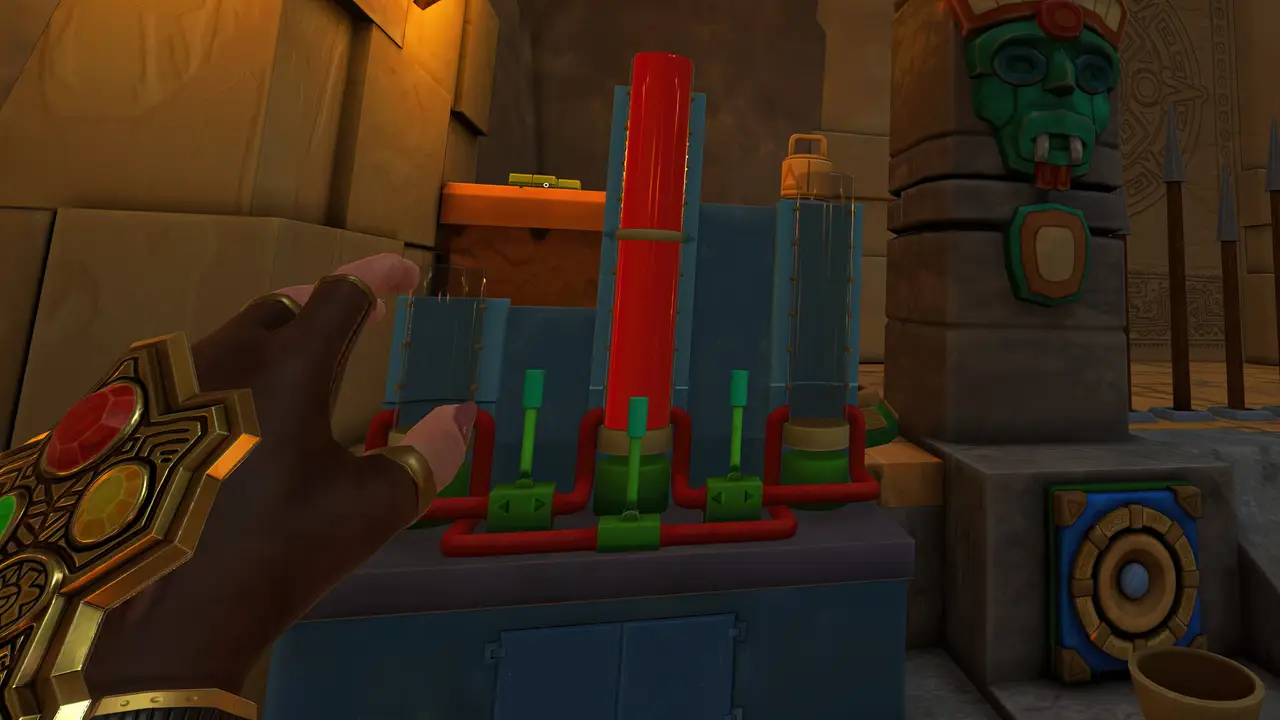
Fix 1: turn your body, not the stick
Snap turn is the default advice, and it is right. But the better habit is not turning with the controller at all.
Stand with your feet slightly apart and pivot at the hips. In a game with no locomotion, your body is the camera, and turning physically removes the mismatch between what your eyes see and what your ears feel. The stick is for the small corrections you cannot make with your feet.
This is why the observatory is the rough chapter: you look up, you turn, and if you do both with the stick you get the exact motion that makes people green.
Fix 2: shorten your focus distance
Sunstone of Time asks you to read carvings at arm's length and turn dials at half that. Sustained near focus is tiring in a headset because the lenses force your eyes to converge at a fixed virtual distance while your brain also tracks the room.
Two changes help. Step back from the object so it sits at a comfortable reading distance rather than against your nose. And look at something far away between puzzles, ideally something real: take the headset off and look out of a window for ten seconds.
Fix 3: cool the room, not just your head
Overheating is the most underrated cause of VR nausea. A headset traps heat, and a warm room plus a warm face plus a puzzle that takes twenty minutes equals a headache that feels like motion sickness.
Point a fan at your chest, not your face, and keep the room a couple of degrees cooler than you would for flat gaming. Water within reach, and drink before you feel dry.
Fix 4: build a ramp, not a marathon
The 20-minute rule works: twenty minutes in, five minutes out, repeat. Do that for three sessions before you attempt an hour.
A schedule that suits this game:
- Session one: Chapter 1 only, about 25 minutes.
- Session two: Chapter 2, seated for the maze, standing for the chest.
- Session three: Chapter 3, with a break at the corridor midpoint.
- After that, chapters as normal, break at each boundary.
If you feel queasy, stop at the next save point rather than pushing to the end of the chapter. Pushing through is what turns a mild wobble into a two-day aversion.
Ginger and acupressure bands have weak evidence and strong anecdotes. If they work for you, use them; the placebo effect is real and harmless. Do not use them to justify a 90-minute session on day one.
Fix 5: check the frame rate before you blame the game
Stutter reads as sickness. If the image judders when you turn your head, your problem is performance, not physiology.
On PSVR2 this is rare, but reprojection artefacts show up in dark scenes as ghosting. On PC, a resolution setting one notch too high will drop frames in the observatory's domed room and nowhere else, which makes it feel like that room is cursed.
The SteamVR settings page → covers the resolution and refresh-rate trade properly.
What not to do
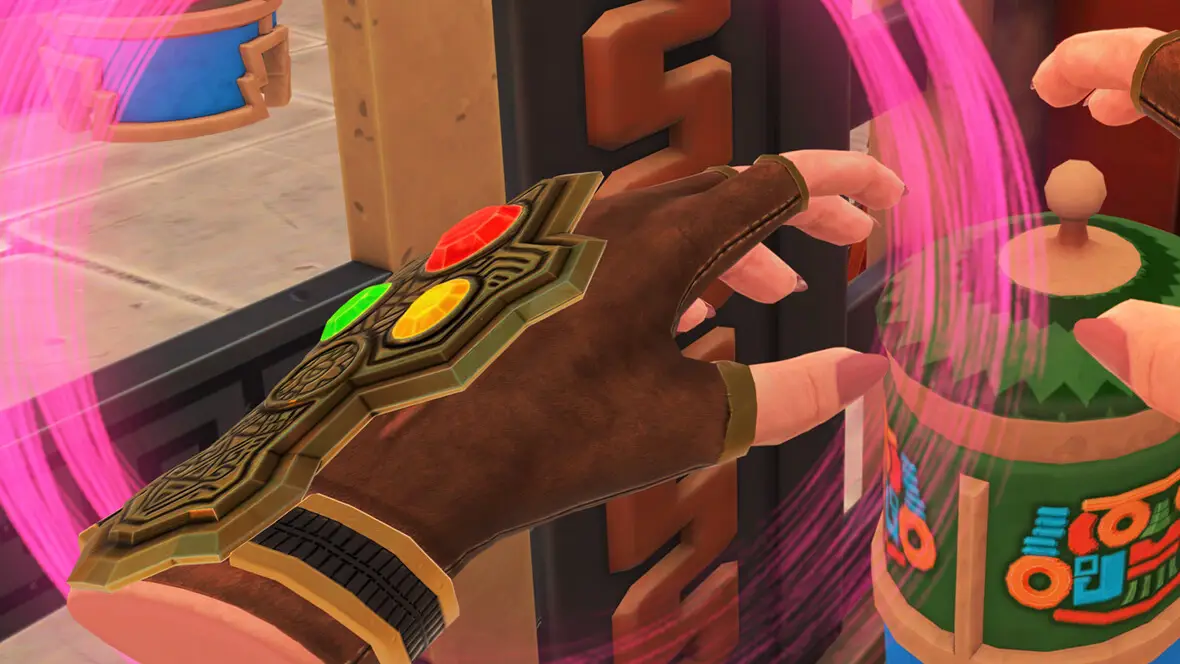
Do not play immediately after a big meal. Do not play drunk; VR amplifies the mismatch. Do not "get it over with" in one sitting on launch day. And do not assume that feeling ill once means VR is not for you; the ramp is the whole point.
If queasiness persists after a week of short sessions, that is worth taking seriously. Stop and talk to a doctor rather than treating a game as a test of will.
FAQ
Does Sunstone of Time cause motion sickness?
It can, despite having no locomotion. Turning, close focus and heat are the usual triggers.
Is snap turn enough on its own?
For most people it is the biggest single fix, but the body-turn habit matters as much.
Why is the observatory worse than other chapters?
Domed ceiling, close detail and a lot of looking up while turning.
Should I play seated to avoid sickness?
Seated helps with fatigue and balance, but it makes reaches awkward. Try seated for reading sections and standing for mechanisms.
Official source: PlayStation Store listing ↗ for play styles, Steam store listing ↗ for PC requirements. Studio and release details: official Sunstone of Time site ↗.
Inference source: the trigger ranking here is general VR comfort practice applied to this game's verified room design, not a clinical study.