
Sunstone of Time Story Explained: Tenochtitlan and Time
What the artifact does, who Tonatiuh and the High Priest are, and how the ending closes Helen's timeline. Spoilers kept to the last section.
Sunstone of Time is a time-travel story told in six rooms. You are a researcher, an Aztec artifact does something it should not, and you wake up in Tenochtitlan with a god in your bracelet and a high priest who wants history to go his way.
The plot is not complicated. It is also not told to you directly: most of it lives in carvings, codices and short lines from characters who are not always honest. This page separates what the game states plainly from what you have to assemble.
Spoiler warning: the last section covers the ending. Everything before it is setup.
If you want the room order first, the full walkthrough → is the better entry point.
The setup
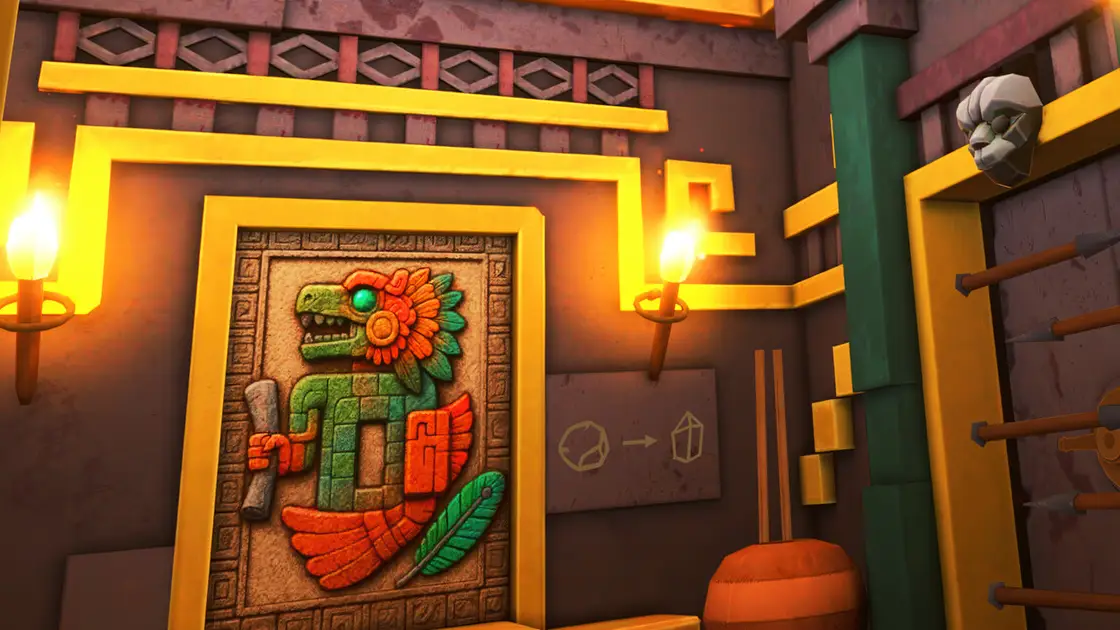
The PlayStation Store description is the cleanest summary available: a researcher's lab experiment goes terribly wrong, an ancient Aztec artifact tears open time, and she wakes in the distant past with one goal, finding a way home.
The official site adds two details. The artifact is the sunstone of the title, and the ritual at the Templo Mayor is the thing standing between you and the trip back. A power-hungry High Priest is unravelling history for his own ends, and stopping him is part of getting home rather than a side quest.
That is the whole premise, and the game spends its running time on atmosphere rather than exposition.
The three forces
The finale is mechanical as well as narrative, and the Chapter 6 walkthrough → walks the light puzzle.
The researcher. A scientist first. She reads glyphs, reassembles codices and treats the artifact as an object of study. Her dialogue is practical, and the game uses her lab habits as the justification for why she can solve any of this.
Tonatiuh. The Aztec sun god, voiced from a gemstone in the bracelet. He is a guide, not an ally in any simple sense. His lines explain mechanics as much as they explain lore, and the game is careful to keep him slightly formal and slightly distant.
The High Priest. The antagonist. He wants the ritual completed, and he is willing to let history break to get it. He is not a monster in the writing; he is a man with a plan that happens to erase the timeline you came from.
The tension between the three is what the story runs on. Tonatiuh wants the ritual stopped for his own reasons, the priest wants it finished, and the researcher wants to go home, which may or may not require either outcome.
What the carvings say
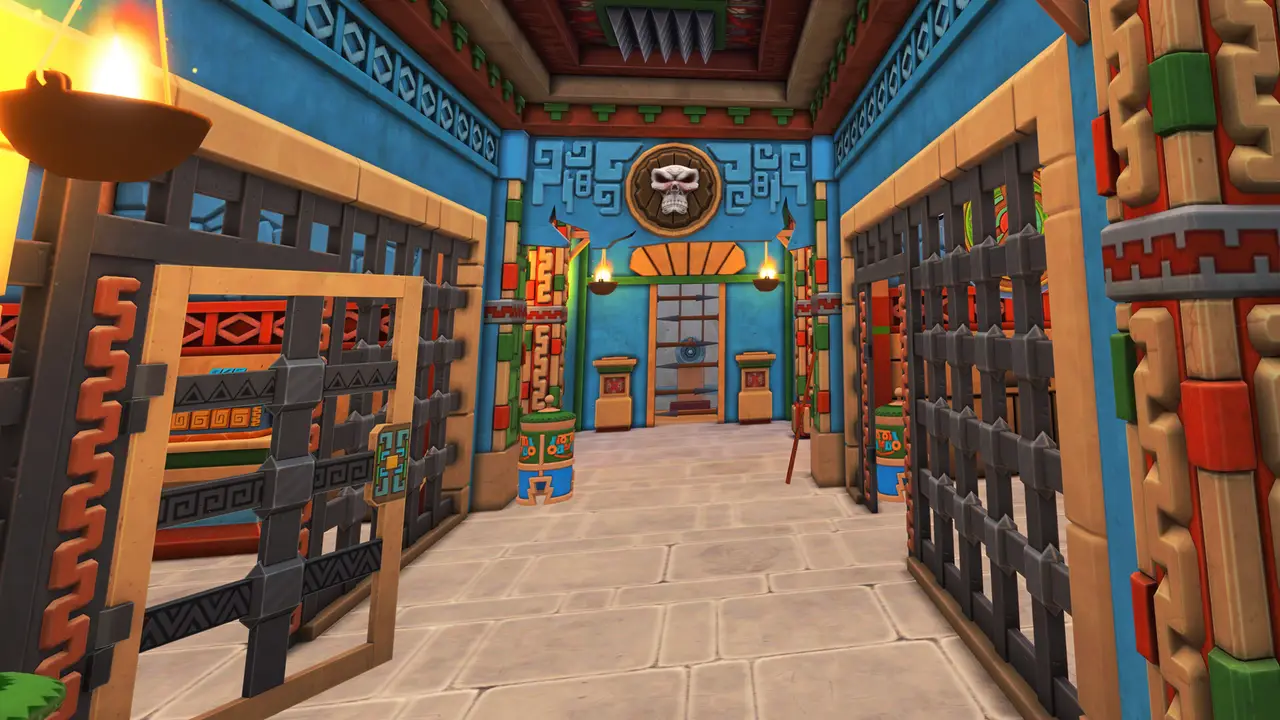
The hidden temple is the story chapter, even though it is fourth. Its wall carvings are the oldest layer of the narrative, and the codex you reassemble is the version the priest does not want read.
The game's structure is doing something clever here. You learn the myth before you meet the myth, because the temple comes before the observatory and the finale. By the time Tonatiuh explains his side, you have already seen the version carved in stone, and the two do not match perfectly.
That gap is the story's actual subject: who gets to write the ritual down.
The ending, with spoilers
The finale is the Templo Mayor, and the goal is to stop the ritual rather than complete it. The light puzzle is the last mechanical barrier, and the game's trophy names tell you the shape of the ending without spoiling the scene: End of the Ritual, then Master of Time.
What the game does not do is offer a branching choice. There is one ending, and it resolves the researcher's trip home and the priest's plan in the same sequence. The ambiguity is in the cost, not in the outcome.
If you are the kind of player who wants the lore fully pinned down, be warned: Sunstone of Time leaves several threads as carvings rather than dialogue. The observatory's eras imply that the timeline has been rewritten more than once, and the game never confirms how many times.
The reassembled codex in the hidden temple reads differently after the observatory. The same panels carry a second meaning once you know the era mechanic, and the game does not point this out.
Does the story matter to the puzzles?
More than in most escape rooms. The puzzles are diegetic: you reassemble a codex because the codex is evidence, you plot constellations because the observatory is a calendar, you stop a ritual because the ritual is the plot.
That is also why the game has no text hints. A hint box would break the fiction faster than a hard puzzle would.
FAQ
Is Sunstone of Time based on a real myth?
It uses Aztec deities and Tenochtitlan as a setting. The specific ritual is the game's invention.
Who is the main character?
A researcher whose lab experiment opens the time tear. The demo material names her Helen.
Are there multiple endings?
No. One ending, no choices that branch it.
Do I need to read the carvings to finish?
No, but two puzzles are much easier if you do. The temple codex in particular.
Official source: PlayStation Store description ↗ for the premise, official site ↗ for the character and setting details. Studio and release details: official Sunstone of Time site ↗.
Inference source: the reading of the carvings and the ending structure is interpretation of in-game text, not a developer statement.